You Don't Always Need to Replace Your Existing Smart Home Platform
Integration · Smart Platform Integration
Many smart home, hotel, and commercial projects already have an established control platform. With the right integration architecture, you can add new devices through a gateway and a suitable protocol — without replacing what already works.
Published
You Don’t Always Need to Replace Your Existing Smart Home Platform
Many smart home, hotel, and commercial projects already have an established control platform. It may be a self-developed software platform, a BMS, Home Assistant, KNX, or another automation system.
When new devices are needed, many people assume the entire platform must be replaced.
In reality, that isn’t always necessary.
With the right integration architecture, an existing platform can continue operating while selected devices are added through a gateway and a suitable communication protocol.
A Practical Integration Approach
One integration method is to keep the customer’s existing control platform unchanged while allowing it to communicate with additional smart devices.
For example, in one residential project, the customer’s own RS485 controller remained the primary control system.
The architecture was:
- Customer Software Platform
- RS485 Controller
- TCP Communication
- Geeklink Gateway
- Smart Devices
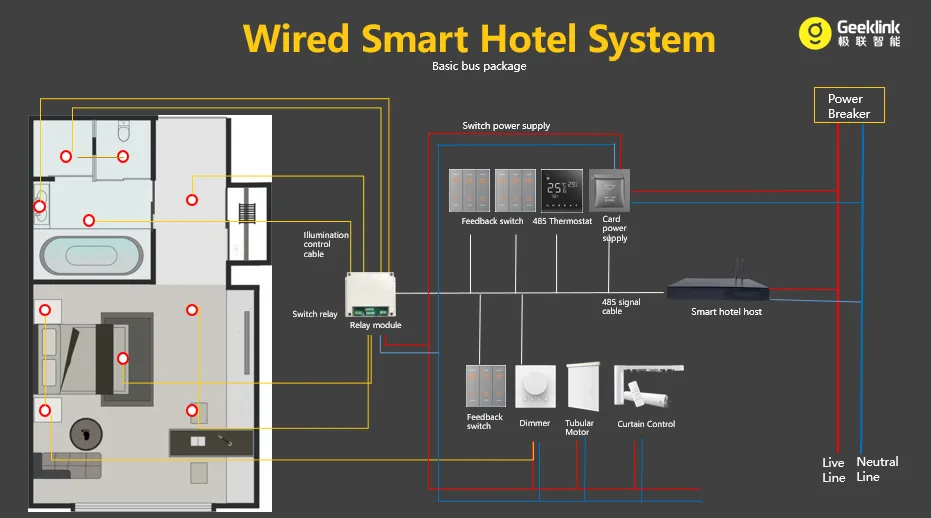
Instead of replacing the customer’s software or controller, our gateway acted as the bridge between both systems.
The customer’s platform continued managing the project, while our gateway handled the devices assigned to our ecosystem.
Device Integration
Different types of devices can be integrated according to project requirements.
For this project, our gateway was used to:
- Learn and control infrared air conditioners.
- Control RF curtain motors.
- Integrate smoke detectors.
- Integrate door and window sensors for security monitoring.
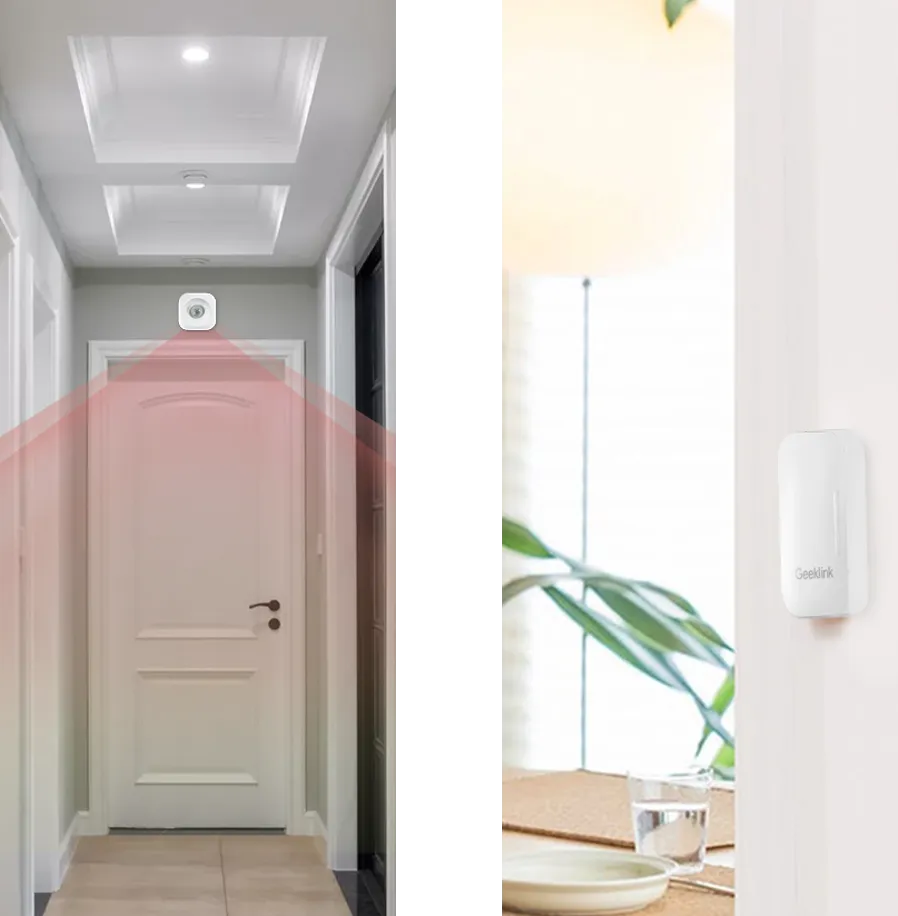
The customer maintained a single management platform while expanding the range of supported devices.
Firmware Customization
Integration is not only about communication protocols.
Sometimes projects also require hardware or firmware customization.
For this project, the customer requested that the gateway operate only through its Ethernet LAN port. The Wi-Fi function was disabled before delivery to comply with the customer’s network requirements.
Small firmware modifications like this can simplify deployment and better match different project environments.
A Simpler Integration Option Today
While controller-to-controller integration remains a practical solution, newer projects often prefer a simpler architecture.
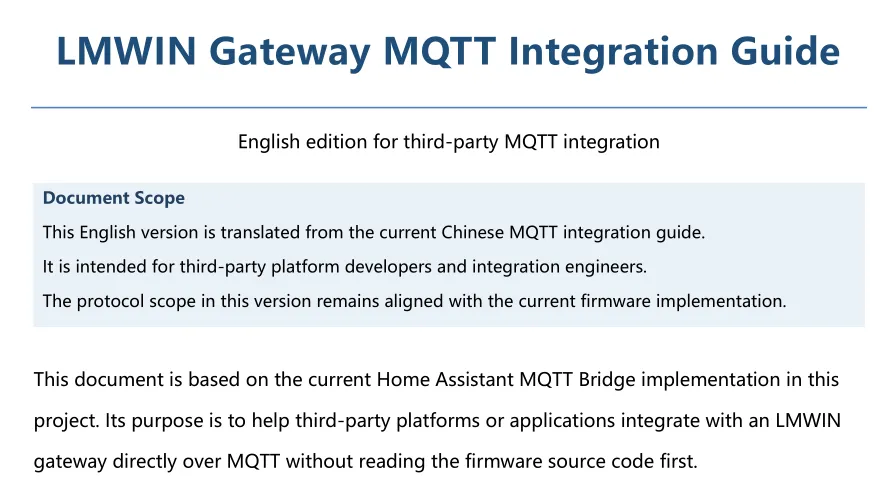
Our gateway now supports local MQTT integration, allowing platforms such as Home Assistant or other software systems to exchange commands and device status through the local network.
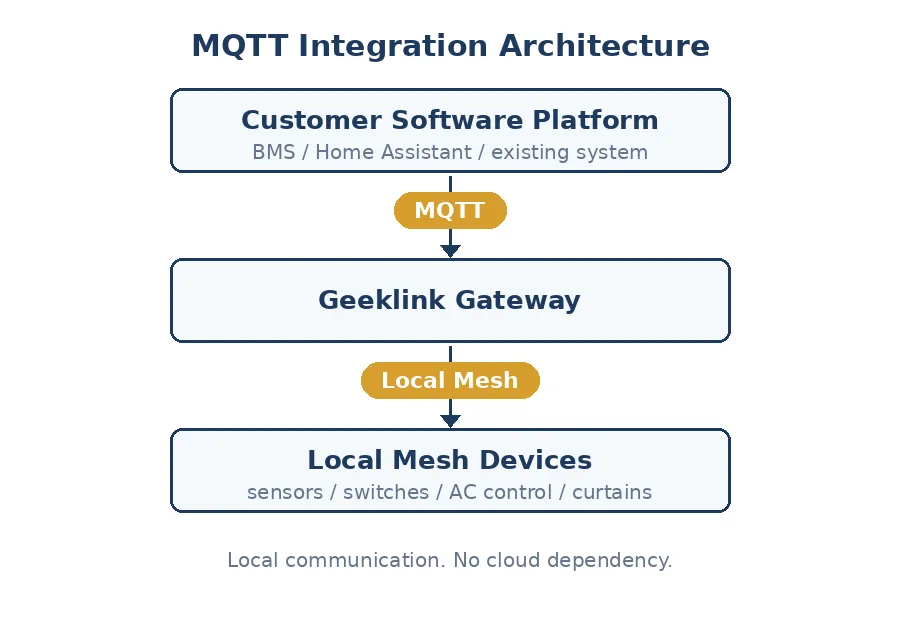
Compared with traditional controller integration, MQTT offers several advantages:
- Simpler software integration
- Faster deployment
- Local communication without cloud dependency
- Better scalability for future expansion
For many projects, MQTT reduces development effort while maintaining reliable local control.
Every Project Is Different
There is no single integration method for every smart home or smart building project.
Some customers prefer RS485.
Others use TCP/IP.
Many modern platforms choose MQTT.
Some projects also require API integration or firmware customization.
The most suitable solution depends on the customer’s existing platform, communication architecture, and project requirements.
Rather than asking customers to replace their existing systems, we focus on integrating with them whenever technically feasible.
Our goal is simple: help customers expand their smart platform while keeping it stable, reliable, and ready for future growth.